A Texas hailstorm can damage your roof in minutes — and what you do in the days afterward can make or break your insurance claim. Move too slowly (or trust the wrong “storm chaser”) and you can end up paying for damage that should have been covered. Here’s exactly what to do.
The short version: stay safe, document everything, get a professional roof inspection, file your claim promptly, and have your roofer meet the adjuster on-site. Most hail damage isn’t visible from the ground, so a real inspection is the step you can’t skip.
Key Takeaways
- After a hail storm in Texas, act quickly: document, inspect, and file before deadlines pass.
- Most hail damage to a roof isn’t visible from the ground — get a professional up there.
- Photograph dents on gutters, screens, and AC units as supporting evidence.
- Be cautious of out-of-town “storm chasers” who knock right after a storm.
- A free, documented inspection protects your claim.
Step 1: Stay Safe and Check From the Ground
Once the storm passes, look for obvious signs from the ground — dented gutters, downspouts, window screens, and your AC unit’s fins. These “collateral” dents are strong evidence of hail size and are safe to photograph. Do not climb on your roof.
Step 2: Document the Damage
Take clear, dated photos of everything you can safely see, and note the date and time of the storm. This documentation supports your claim later, especially if the insurer questions when the damage happened.
Step 3: Get a Professional Roof Inspection

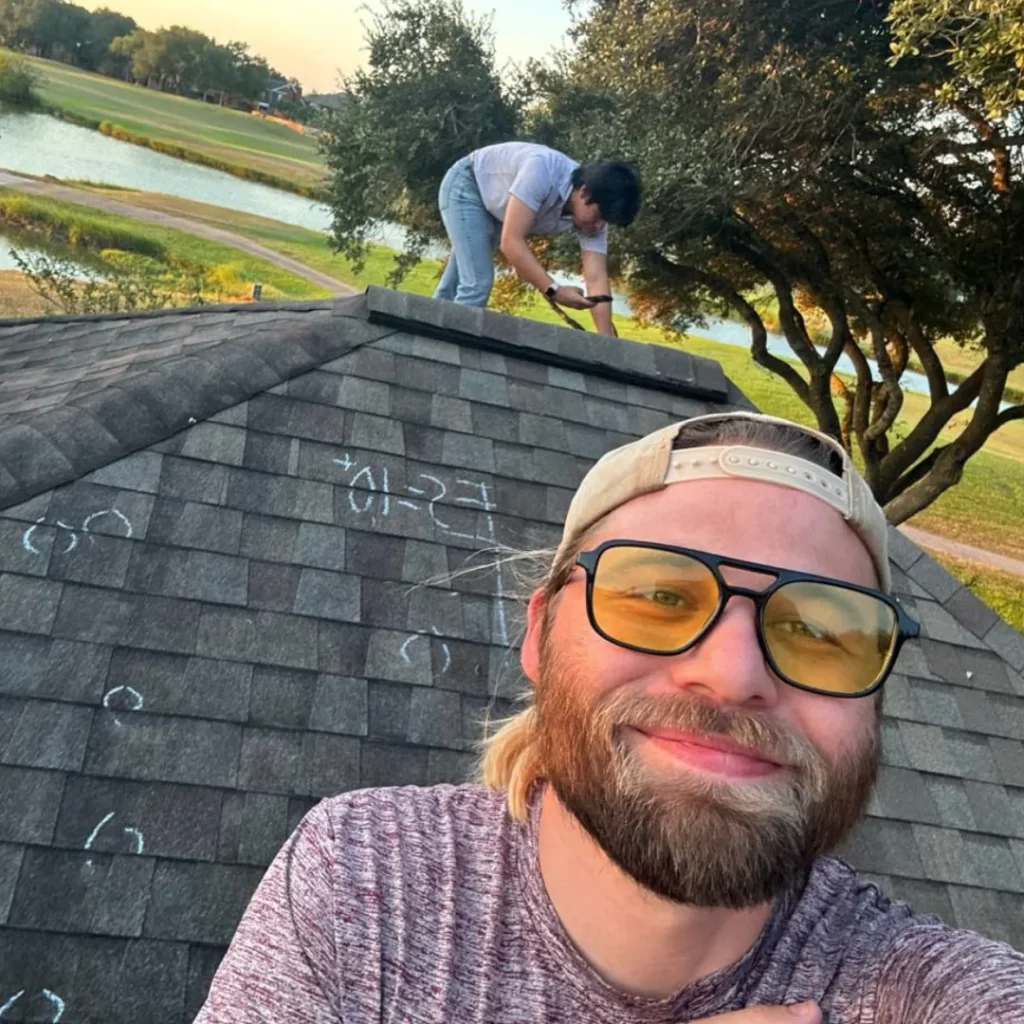
This is the step that matters most. Hail bruising on shingles is often invisible from the ground but very real — and a licensed roofer knows exactly what to look for. Flagstone’s inspection is free and no-pressure, and we document everything you’ll need for a claim.
Step 4: File Your Claim Promptly
Contact your insurer to open a claim while the storm is well-documented. Texas policies have filing deadlines, and waiting makes it harder to prove the hail caused the damage. Have your storm date, photos, and inspection ready.
Step 5: Meet the Adjuster With Your Roofer
When the insurance adjuster comes out, have your roofer there to walk the roof with them. Together they document the damage accurately so nothing covered gets missed — which directly affects your payout.
A Word on Storm Chasers
After a big Texas hailstorm, out-of-town crews flood the neighborhood knocking on doors. Be careful. Choose a local, established, licensed roofer who will still be here for your warranty years from now — not someone who disappears after cashing the insurance check.
Hit by Hail? Start With a Free Inspection
Don’t guess whether your roof was damaged — and don’t let a storm chaser rush you. Flagstone Roofing gives you a free, documented inspection, works with every insurance company, and meets your adjuster on-site. We’re local, GAF Certified, with 30+ years and 430+ five-star reviews.
Call 855-898-ROOF (7663) or book your free inspection today.
Frequently Asked Questions
Can I see hail damage on my roof from the ground?
Usually not. Hail bruising on shingles is often invisible from the ground, which is why a professional inspection is the most important step after a storm.
How long do I have to file a hail damage claim in Texas?
Deadlines vary by policy, so file as soon as possible after documenting the damage. Waiting makes it harder to prove the hail caused the damage.
Should I use a storm chaser roofer after a hailstorm?
Be cautious. Out-of-town crews often disappear after the job. Choose a local, established, licensed roofer who will honor your warranty for years to come.
What should I photograph after a hailstorm?
Photograph dents on gutters, downspouts, window screens, and your AC unit, plus anything visible on the roof from the ground. Note the storm’s date and time.
Is the hail damage inspection free?
Yes. Flagstone’s inspection is free and no-pressure, and we document everything you need for an insurance claim.