You are good with people, you are tired of a ceiling on your paycheck, and someone told you roofing sales pays well. Fair enough. But before you apply anywhere, you deserve an honest answer to the question nobody posts on a job board: what does a roofing sales rep actually do all day?
What does a roofing sales rep do?
A roofing sales rep finds homeowners who need roof work, inspects the roof to document real damage, explains what the homeowner is looking at in plain language, and guides them through repair, replacement or an insurance claim. The job is roughly half field work — knocking neighborhoods, climbing ladders, photographing damage — and half communication: adjuster meetings, follow-up calls, and keeping a nervous homeowner calm through a process they have never been through before.
Key Takeaways
- It is a field job, not a desk job. Expect to be outside, on ladders, and in neighborhoods most of the day.
- The core skill is explaining a roof honestly to someone who is stressed — not high-pressure closing.
- Insurance knowledge is what separates a rookie from a rep homeowners trust.
- Follow-up wins more work than first conversations do. Most of the money is in week two, not day one.
- No roofing background is required. Reading people, showing up early, and being coachable matter more.
A realistic day
There is no identical day, but the shape repeats.
Mornings usually start with the jobs already in motion — a homeowner waiting on a supplement decision, an adjuster meeting scheduled for 10 a.m., a crew starting a tear-off that you promised to check on. Adjuster meetings are the appointments you never miss. You are there to walk the roof with the insurance adjuster, point out the damage you documented, and make sure nothing legitimate gets missed.
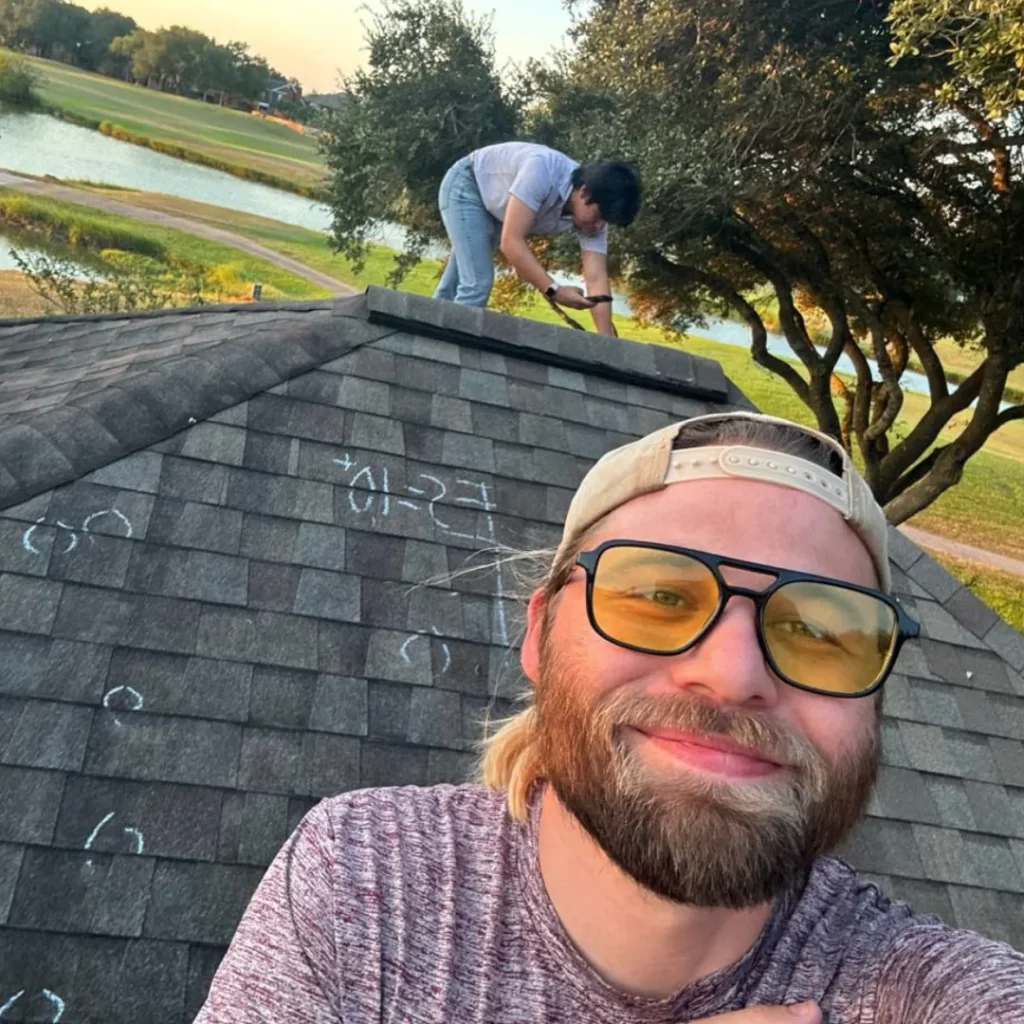
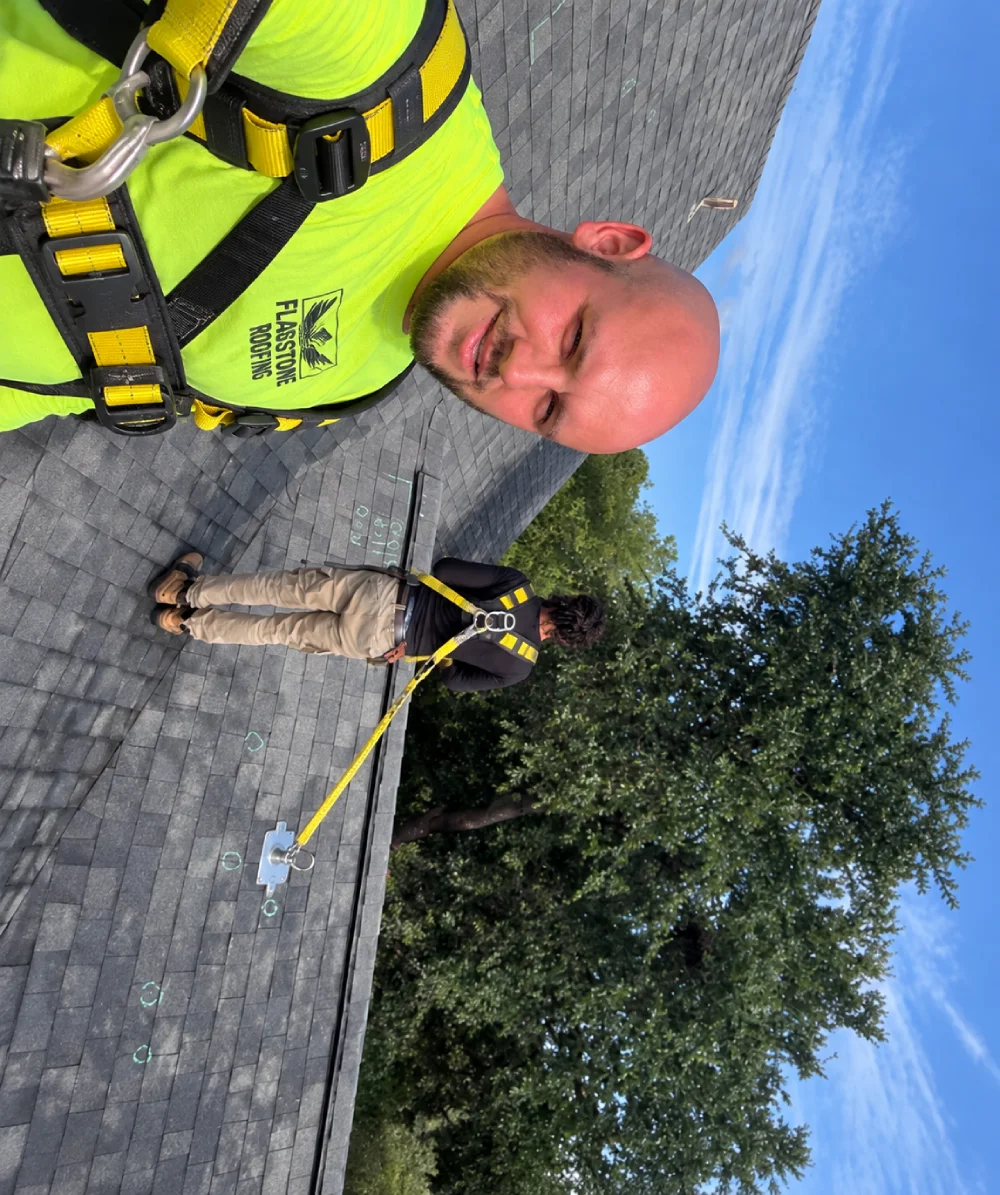
Midday is inspections. A homeowner calls about a leak or responds to a door knock, and you go look. You get on the roof when it is safe to, take photographs, check the decking, the flashing, the vents, the gutters. Then you come down and tell them the truth — including “your roof is fine, you do not need us,” which you will say more often than you expect and which is the single fastest way to build a reputation in a neighborhood.
Afternoons and early evenings are when homeowners are home. That is when you knock, when you follow up, and when most agreements actually get signed. If you want a job where you are done at 4 p.m., this is not it. If you want a job where the hours you put in are visibly connected to what you earn, it is.
What the job actually requires
| The job needs | What that looks like day to day |
|---|---|
| Physical comfort outdoors | Ladders, roofs, Texas heat, walking neighborhoods |
| Plain-language explanation | Turning “compromised shingle mat” into something a homeowner understands |
| Insurance literacy | Knowing what a claim covers, what an adjuster looks for, what a supplement is |
| Organization | Tracking dozens of homeowners at different stages without dropping anyone |
| Emotional steadiness | Staying calm with a stressed homeowner and a slow insurance company |
| Self-direction | Nobody schedules your day for you — you do |
Notice what is missing: a construction background, a sales background, and a degree. Those help, but none of them are the constraint.
The part nobody warns you about
The hardest part of roofing sales is not rejection at the door. Most people handle that fine after two weeks. The hard part is the middle — the twenty homeowners who are interested, waiting on an adjuster, waiting on a spouse, waiting on a decision, all at different stages at once.
New reps lose most of their income there. They have great first conversations and then let people go quiet. The rep who writes down every commitment, follows up when they said they would, and keeps the homeowner informed while the insurance company takes three weeks will out-earn a more charismatic rep who does not, every single time.
Follow-up is boring, and it is the job.
Do you need roofing experience?
No. Most strong reps did not come from construction. They came from restaurants, car sales, the military, coaching, retail management — anywhere they learned to talk to strangers and stay organized under pressure.
What has to be taught is the technical side: how to identify hail bruising versus blistering, how a claim actually works, what an adjuster is looking for, what a roof system is made of. That is trainable, and it is trained. What cannot be trained quickly is showing up on time, being coachable, and telling the truth when a lie would be easier.
For a fuller picture of the field, the U.S. Bureau of Labor Statistics publishes an occupational profile for sales representatives covering typical duties, work environment and outlook.
How you get trained at Flagstone
Flagstone Roofing has been doing this in Texas for over 30 years — GAF Certified, BBB A+, 400+ five-star reviews, backed by a lifetime workmanship warranty and $1M in liability coverage. That matters to you as a rep more than it sounds: you are knocking a door with a company behind you that homeowners can look up, and a warranty you never have to apologize for.
New reps get in-field training alongside experienced reps and in-office training, plus access to the 6 Figure Blueprint — the internal university that teaches the roofing, insurance and sales side properly instead of handing you a script and pointing at a neighborhood.
Income is uncapped and commission-driven. What you earn is genuinely a function of how many roofs you inspect, how well you follow up, and how much homeowners trust you.
Is this the right job for you?
It probably is if you want your income tied to your effort, you would rather be outside than at a desk, you can handle being told no, and you are willing to learn a technical trade properly.
It probably is not if you want predictable hours, a fixed salary, or a job where someone else fills your calendar.
If that first paragraph sounds like you, we are hiring in Texas and we would rather talk to you than read a resume.
Book an interview with Flagstone Roofing — or call 855-898-ROOF and ask about the sales team. Learn more about the company at flagstoneroofing.com.
Frequently Asked Questions
Do you need experience to be a roofing sales rep?
No. Most strong reps come from restaurants, car sales, the military, coaching or retail management. The technical side — hail damage, insurance claims, roof systems — is trainable and gets trained. Showing up on time, being coachable and telling the truth are what cannot be taught quickly.
Is roofing sales a hard job?
It is physically demanding and self-directed. You will be outside, on ladders, and in Texas heat, and nobody schedules your day for you. Most people handle door rejection within two weeks; the genuinely hard part is staying organized across twenty homeowners at different stages of a claim.
What hours does a roofing sales rep work?
Mornings usually go to jobs already in motion and adjuster meetings, midday to inspections, and late afternoon into early evening to knocking and follow-up, because that is when homeowners are home. It is not a job that ends at 4 p.m.
Do roofing sales reps have to get on the roof?
Yes, when it is safe to. Getting on the roof is how you document real damage with photographs — decking, flashing, vents and shingles — instead of guessing from the ground. Being comfortable on a ladder is part of the job.
How is a roofing sales rep paid?
At Flagstone Roofing the role is commission-driven with uncapped income, so what you earn tracks how many roofs you inspect, how well you follow up, and how much homeowners trust you. There is no fake ‘paid training’ — training is real and provided through in-field work and the 6 Figure Blueprint.
How do I apply to Flagstone Roofing?
Book an interview at flagstoneroofing.com/careers/, or call 855-898-ROOF and ask about the sales team. We would rather have a conversation than read a resume.