A roof leak never happens at a convenient time — and what you do in the first hour can be the difference between a quick fix and thousands in water damage. Here’s exactly what to do when your roof starts leaking.
What to Do When Your Roof Is Leaking? The short version: contain the water inside, protect your belongings, find the source if you safely can, and call a professional roofer right away. Don’t climb onto a wet roof, and don’t ignore a “small” leak — water damage compounds fast.
Key Takeaways
- When your roof is leaking, act fast: contain the water, protect your belongings, and call a roofer.
- Move furniture and valuables, and catch dripping water in buckets.
- Relieve a water bulge in the ceiling carefully to prevent a bigger collapse.
- Never climb onto a wet or storm-damaged roof yourself.
- Document everything for a possible insurance claim.
Step 1: Contain the Water Inside
Grab buckets or containers to catch dripping water and lay towels to protect your floors. Move furniture, electronics, and valuables out of the way. The goal is to limit interior damage while you get help.
| Step | What to do | Why it matters |
|---|---|---|
| 1 | Contain the Water Inside | Grab buckets or containers to catch dripping water and lay towels to protect your floors. |
| 2 | Relieve a Bulging Ceiling | If water is pooling in a ceiling bulge, that trapped water can bring the whole section down. |
| 3 | Find the Source (Safely) | Water often travels before it drips, so the leak’s source may be higher up than where you see it inside. |
| 4 | Document the Damage | Photograph everything — the interior damage, the ceiling, and anything visible in the attic. |
| 5 | Call a Professional Roofer | A leak means water is already getting into your home’s structure. |
Step 2: Relieve a Bulging Ceiling

If water is pooling in a ceiling bulge, that trapped water can bring the whole section down. Place a bucket underneath and carefully puncture the center of the bulge with a screwdriver to let it drain in a controlled way. It feels counterintuitive, but it prevents a bigger mess.
Step 3: Find the Source (Safely)
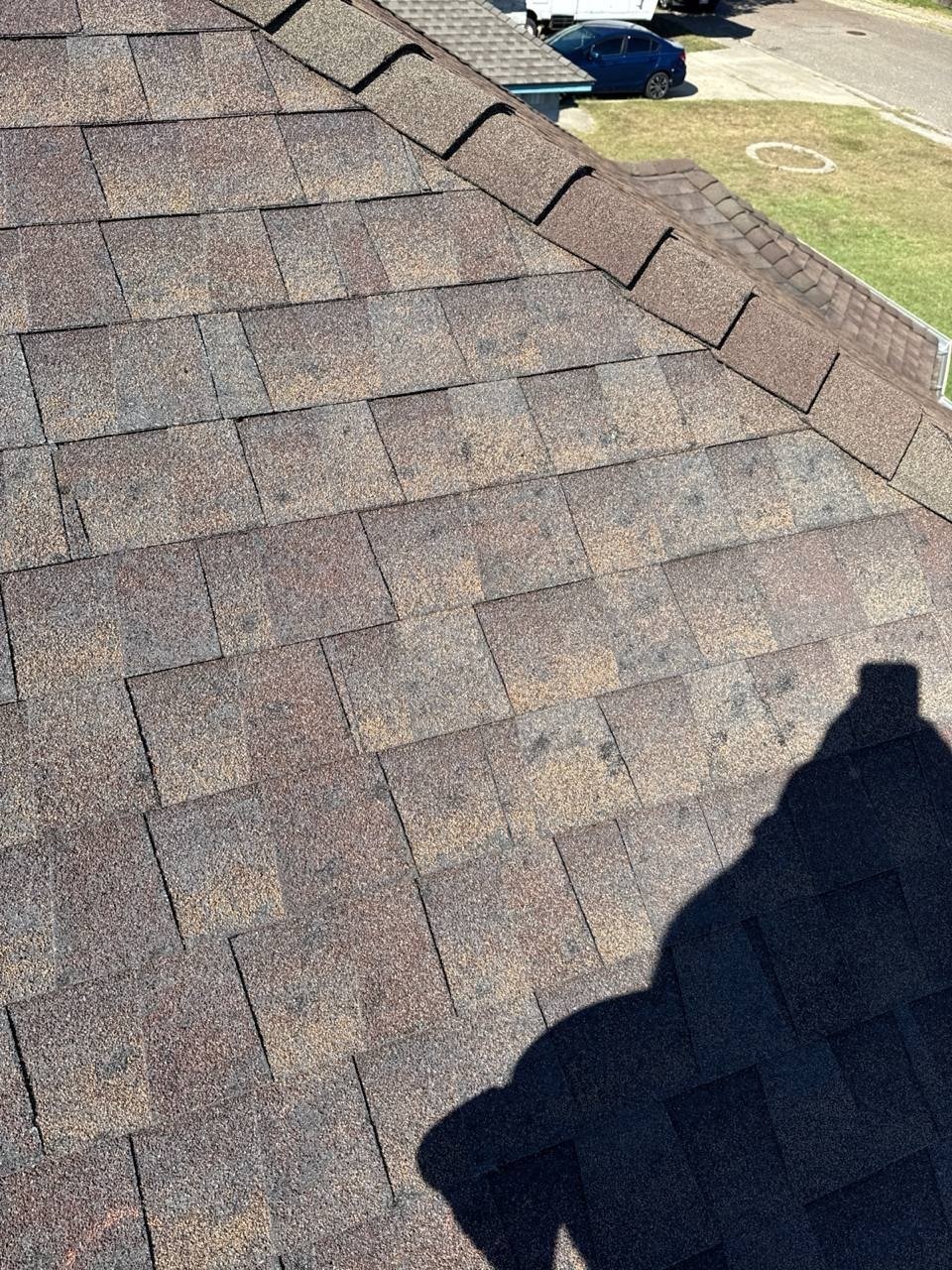
Water often travels before it drips, so the leak’s source may be higher up than where you see it inside. Check the attic with a flashlight for wet wood, active drips, or daylight. Do not climb onto the roof — especially if it’s wet or storm-damaged.
Step 4: Document the Damage
Photograph everything — the interior damage, the ceiling, and anything visible in the attic. If a storm caused the leak, this documentation supports an insurance claim later.
Step 5: Call a Professional Roofer
A leak means water is already getting into your home’s structure. Call a licensed roofer promptly for an inspection and repair. The faster it’s fixed, the less you’ll pay in rot, mold, and interior repairs down the road.
What Not to Do
- Don’t climb onto a wet or storm-damaged roof. Falls put more people in hospital than leaks
ever put roofs in landfill, and a damaged deck can give way under you.
- Don’t run a hose on the roof to find the leak while it is raining — you will add water to a
problem you cannot see yet.
- Don’t tear out wet drywall or insulation before you have photographed it. That material is
your evidence.
- Don’t wait for it to dry out on its own. Water that got in once has a path, and it will use
it again on the next storm.
- Don’t take a “free” repair from anyone who offers to cover your deductible. In Texas that is
a criminal offense under
Texas Business & Commerce Code §27.02,
strengthened by HB 2102
in 2019 — and it tells you exactly who you are dealing with.
Is This an Emergency, or Can It Wait Until Morning?
Call immediately if water is running anywhere near electrical fixtures or a panel, if a ceiling is
sagging or bulging, if the leak is active while a storm is still going, or if you can see daylight
through the roof or missing decking from the attic. It can usually wait for normal hours if the
stain is slow and dry to the touch, if the drip stops when the rain stops, and if nothing
structural is sagging. When you are not sure, treat it as urgent — a phone call costs nothing.
Where Roof Leaks Actually Come From
Water rarely enters directly above the stain on your ceiling; it runs along the underside of the
decking, down a rafter, and drips wherever it runs out of road. The usual entry points, roughly in
order of how often they turn up:
- Flashing and penetrations — chimneys, plumbing vents, skylights, and wall junctions, where
two materials meet and sealant ages.
- Valleys, where two roof planes dump their water into one channel.
- Nail pops and lifted tabs, often left behind by wind or by an earlier repair.
- Ridge and hip caps damaged by wind.
- Wind-driven rain pushed up and under the shingle course.
- Clogged gutters backing water up under the eave.
This is exactly why “we patched where the stain was” so often fails to hold.
What Your Insurance Will Need From You
Sudden, storm-caused damage is generally what a homeowners policy is for; slow seepage and plain
wear generally are not. The difference is often decided by your record rather than by the roof, so
build one as you go: note the date and time the leak started, photograph the interior damage
before you clean anything up, photograph anything visible from inside the attic, keep receipts for
tarps, buckets and any emergency work, and get a professional inspection with documentation. If
you do file, have your roofer meet the adjuster on site so both sides are looking at the same
damage at the same time.
Leaking Now? We Can Help
Don’t let a roof leak turn into a major repair bill. Flagstone Roofing responds quickly, finds the true source, and fixes it right — and our inspection is free and no-pressure. We’re GAF Certified with 30+ years and 400+ five-star reviews, and we work with every insurance company.
Call 855-898-ROOF (7663) or book your free inspection today.
Frequently Asked Questions
What should I do first when my roof leaks?
Contain the water with buckets and towels, move furniture and valuables out of the way, and protect your floors. Then find the source safely and call a roofer.
Should I puncture a bulging ceiling from a leak?
Yes, carefully. Place a bucket underneath and puncture the center of the bulge with a screwdriver to drain the trapped water in a controlled way and prevent a larger collapse.
Can I go on my roof to find the leak?
No. Never climb onto a wet or storm-damaged roof – it’s dangerous. Check the attic with a flashlight instead, and leave the roof to a professional.
Is a small roof leak an emergency?
Treat it like one. Even a small leak lets water into your home’s structure, and the damage compounds quickly into rot and mold. Get it inspected promptly.
Will insurance cover roof leak damage?
If the leak was caused by a covered event like a storm and is documented, your policy may cover the damage. Photograph everything and consult your insurer.